
Building Social Skills in Kids: Encouraging Friendships and Everyday Problem-Solving

Supporting social emotional skills is not only about managing emotions. It also includes how children interact with others, navigate social situations, and respond to challenges.
These skills do not develop automatically. They are learned through experience, guidance, and reflection over time.
Children benefit from support in understanding how their actions affect others, how to handle disagreements, and how to stay engaged in social situations that may feel uncomfortable. Building social skills in kids means providing the tools and language they need to move through these moments with greater confidence.
Social interactions can be complex, especially for children who are still learning to read social cues, interpret tone, or understand unspoken expectations. What might seem straightforward to adults—sharing space, taking turns, or navigating a disagreement—can feel overwhelming without guidance.
The good news is that these skills can be practiced and strengthened through everyday interactions at home.
Building Social Skills in Kids Through Positive Peer Interactions
Encouraging positive peer interactions starts with preparation, not correction. Instead of waiting for challenges to happen, parents can talk through common situations ahead of time.
Discussing how to join a group, respond to conflict, or handle disappointment gives children a framework to use when those moments arise. You might say, "If you want to play with them at recess, you could ask what game they're playing and see if you can join."
These conversations work best when they happen in neutral moments—not in the middle of a conflict or right after something went wrong. When emotions are calm, children are more open to thinking through options and rehearsing responses.
It is also helpful to notice what is already working. When children handle a situation well, even in a small way, naming that success reinforces the behavior.
Statements like "You waited your turn there" or "You handled that really calmly" provide clear feedback. This kind of acknowledgment shows children what effective social behavior looks like and encourages them to repeat it.
Social confidence builds when children experience success and understand what contributed to it. Over time, they begin to recognize patterns in what works and apply those strategies independently.
What Building Social Skills in Kids Looks Like in Everyday Moments
Building social skills in kids does not require formal lessons or structured social skills groups for most children. It happens through daily interactions and the guidance parents provide along the way.
You might notice an opportunity during a playdate, at the park, or even during family game night. These are moments to observe, support, and gently guide when needed.

For example, if your child is waiting for a turn with materials during a group activity, you might pause and quietly ask, 'What could you say to let them know you'd like a turn?' This prompts the child to think through their options rather than relying on a parent to solve the problem.
It also helps to model social behavior in your own interactions. When children see adults navigating disagreements calmly, asking clarifying questions, or apologizing when something goes wrong, they learn what healthy social interaction looks like in practice.
Helping Children Develop Perspective-Taking Skills
One of the foundations of building social skills in kids is helping them consider how others might be feeling or thinking. Perspective-taking does not come naturally to all children, especially younger ones, but it can be practiced.
During or after a social interaction, you might ask questions like, "How do you think she felt when that happened?" or "What do you think he was hoping for?"
These questions encourage children to step outside their own experience and consider someone else's point of view. Over time, this builds empathy and helps children make more thoughtful choices in how they respond to others.
You can also use books, shows, or real-life observations as low-stakes opportunities to practice. "I noticed that character looked sad when his friend left. Why do you think he felt that way?" These conversations build the skill without the pressure of being in the moment.
Practicing Problem-Solving and Decision-Making
Supporting social emotional skills also involves helping children think through challenges rather than immediately solving them.
When a problem comes up, pausing before stepping in creates an opportunity for growth. Asking questions like "What do you think you could do?" or "What are some options here?" encourages independent thinking.
If needed, parents can guide by offering a few options, but allowing the child to choose helps build ownership. You might say, "You could try asking again, or you could find something else to do for a few minutes. What feels like the better choice?"
Decision-making skills improve with practice. Starting with smaller, low-stakes situations allows children to build confidence before applying those skills to more complex challenges.
These moments also teach children that not every problem has a perfect solution. Sometimes the goal is simply to make a reasonable choice and see what happens next.
Teaching Children to Recover From Social Missteps
Building social skills in kids also means helping them navigate mistakes. Not every interaction will go smoothly, and that is okay.
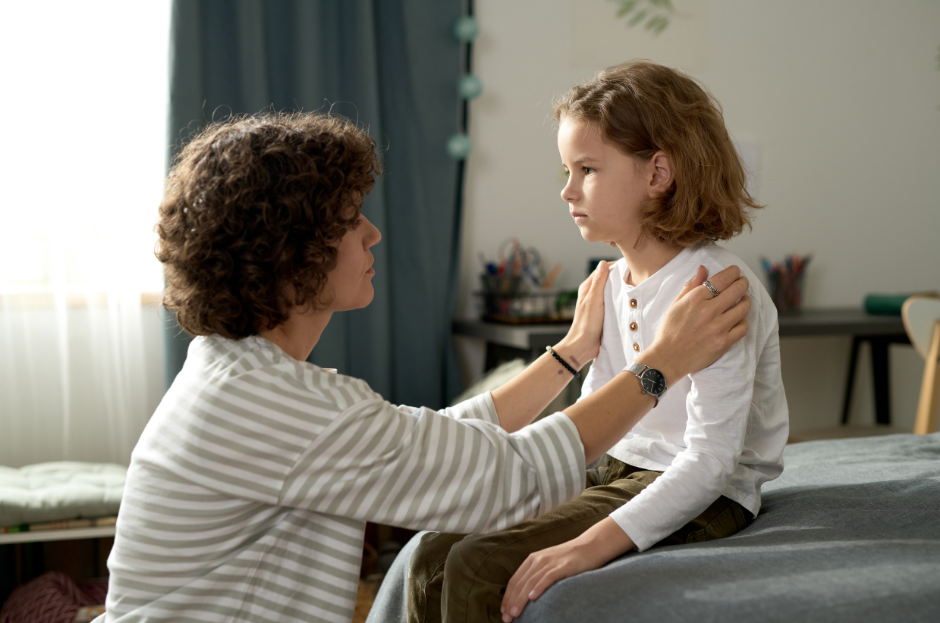
What matters is how children respond when something does not work out. Can they recover? Can they try again? Can they learn from what happened?
After a tough social moment, try revisiting it later when emotions have settled. You might say, "Earlier at the park, things got a little tricky with your friend. What do you think happened?" This opens the door for reflection without shame.
Then you can guide them toward problem-solving. "What could you try differently next time?" or "How could you let them know how you're feeling?"
This kind of reflection builds resilience. It shows children that mistakes are part of learning and that they have the ability to adjust and improve.
Creating Opportunities for Social Growth
Children need repeated opportunities to practice social and problem-solving skills. This happens naturally through play, group activities, and daily interactions at home and in the community.
Not every situation will go smoothly. Mistakes are part of the learning process.
What matters most is creating an environment where children feel supported in trying, adjusting, and trying again. When children know they can take social risks without harsh judgment, they are more willing to engage, experiment, and grow.
Building social skills in kids this way helps children become more adaptable, confident, and capable in their interactions with others. These are skills that carry forward into school, friendships, and eventually adulthood.
The foundation is built at home, one conversation and one interaction at a time.
Wondering how to help your child handle social situations with more confidence?
Get tips, conversation strategies, and simple tools you can use right away to support your child’s social and emotional growth at home.


.png)
Comments